


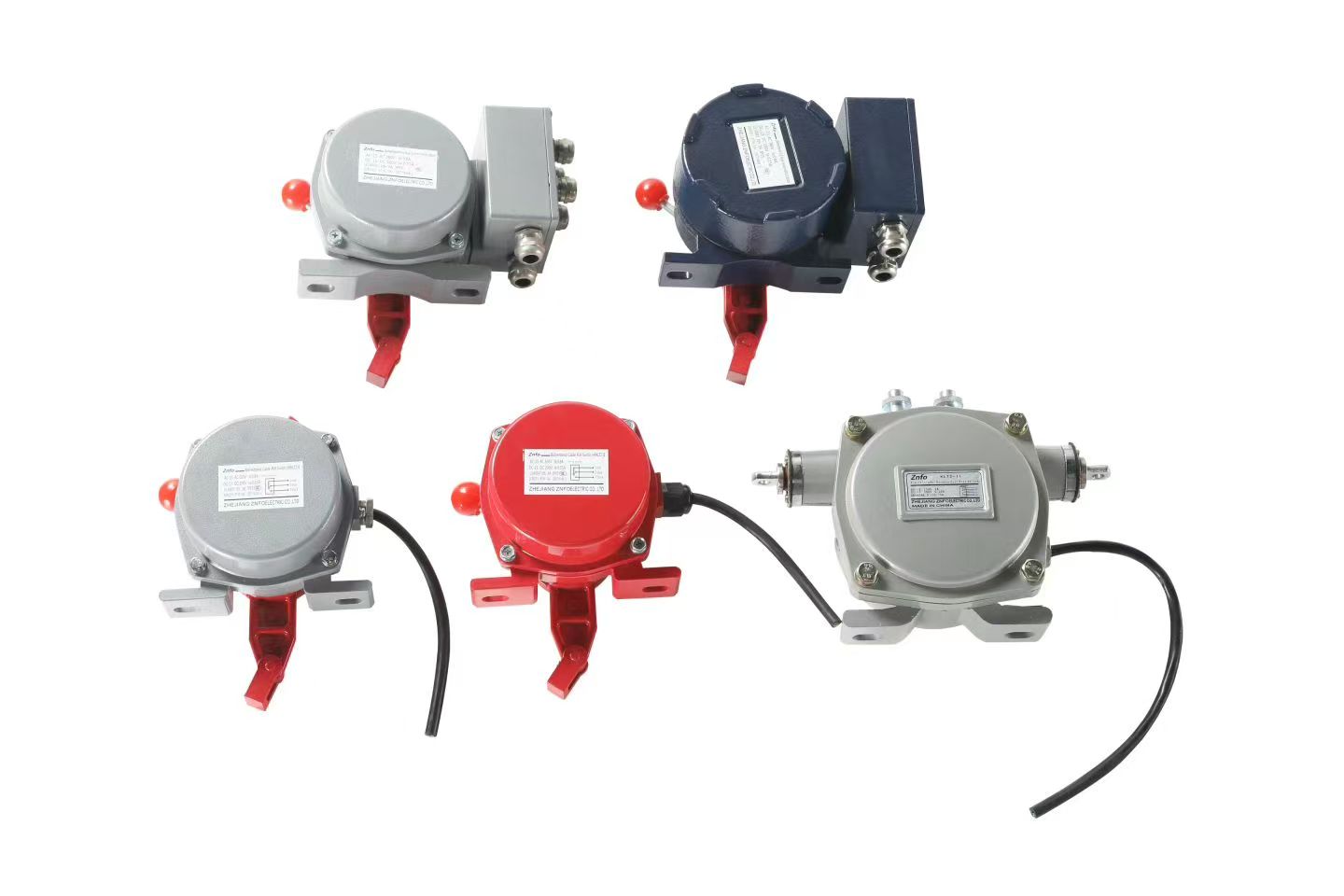






Introduction of DQX1 travel switch
How it works
The limit switch uses the collision of the moving parts of the production machinery to make its Contacts move to connect or disconnect the control circuit and achieve a certain control purpose. When the module installed on the moving parts of the production machinery hits theDQX1 limit switch, its contacts move to switch the circuit. The working principle is similar to that of the button, except that one is manual and the other is caused by the collision of the moving parts.
Structural composition
Switching element: It is the core part, which can be divided into slow action switch and speed switch, and is used to realize the on-off switching of the circuit.
Terminal block: used to connect external circuits to achieve signal transmission.
Switch actuator: such as rollers, levers, plungers, etc., which are in contact with the moving parts and transmit motion and force.
Transmission part: transmits the movement of the switch actuator to the switch element to make the contacts move.
Features
High precision: DQX1-GL-2/5 adopts high-precision technology to ensure reliable stroke control and can meet the stroke control requirements of various mechanical equipment.
Quick response: It can quickly capture travel changes, cut off or switch circuits in time to ensure safe operation of the equipment.
Easy to install: It adopts standard wiring method and supports multiple installation methods, such as side installation, top installation, etc., which is convenient for installation in different occasions.
Application Areas
CNC machine tools: used to control the moving range of tools and workbenches, prevent over-travel collisions, and protect the safety of machine tools and workpieces.
Injection molding machine: monitor the opening and closing status of the mold to achieve precise control of the automated production process and ensure product quality.
Conveyor belt: detect the material position, control the start, stop or turn of the conveyor belt, and realize accurate transportation and positioning of materials.
Automatic storage system: locate the moving position of shelves and stackers to improve the automation and efficiency of storage operations.
Wind turbines: monitor blade angle and yaw position to prevent overspeed or overload, and ensure safe and stable operation of wind turbines.