








Limit Switches: Little Guardians of Industrial Safety
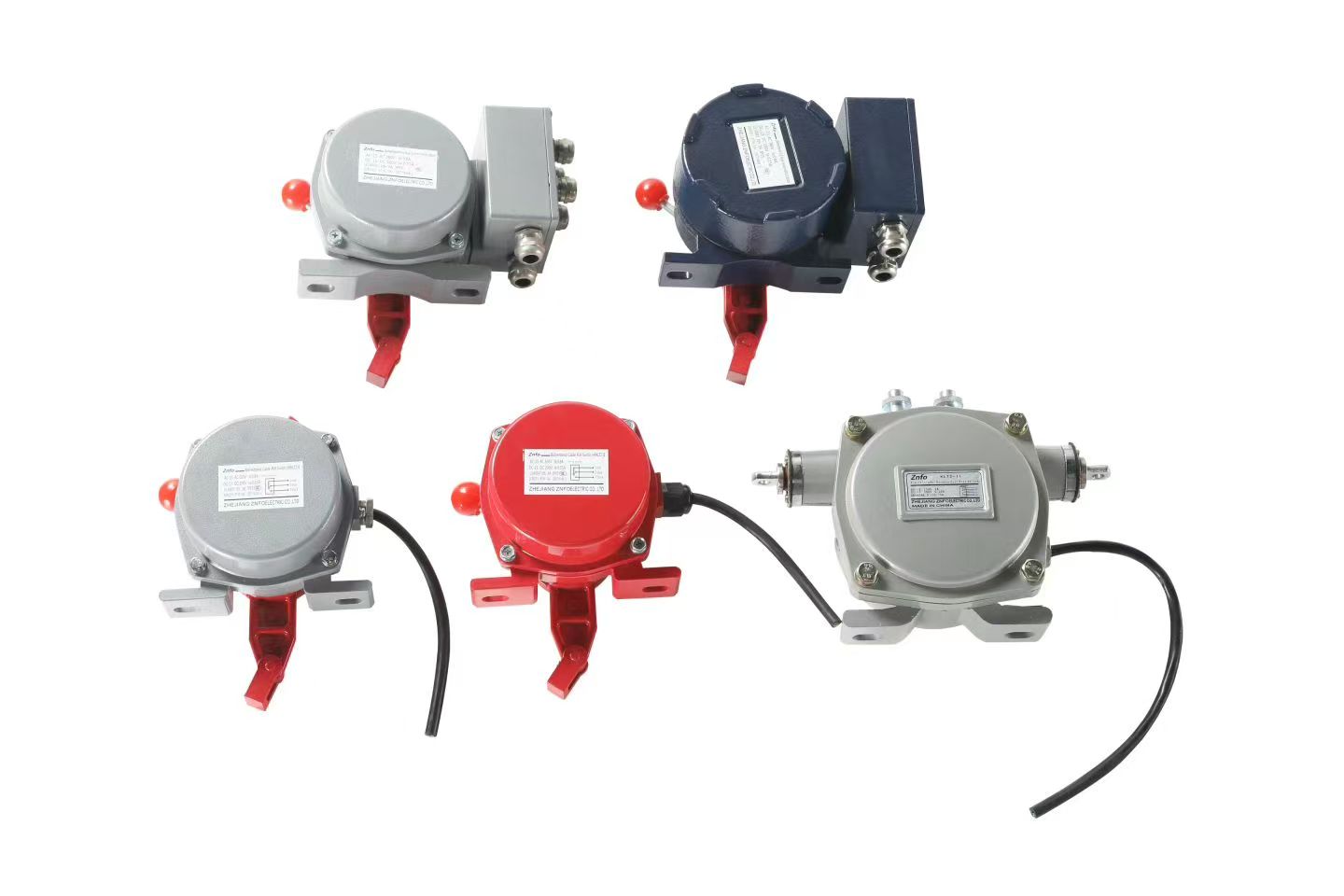
In the vast world of industry, there is a seemingly inconspicuous yet crucial role – the Limit Switch. It is like a tireless safety “little guardian”, shouldering a “big role” with its “small size”, silently protecting the safety and stability of industrial production.
A limit switch is essentially a switching device that controls a circuit based on the displacement of an object. Its working principle is intuitive and simple: when a mechanical moving part touches the operating head of the limit switch, it's like triggering a mysterious mechanism; the internal Contacts quickly actuate, thereby controlling the on/off state of the circuit. This simple yet effective mechanism has become a crucial guarantee for the normal operation of many industrial equipment.
Limit switches have extremely wide applications in modern industrial production, practically ubiquitous. In machine tools, they act like precise commanders, accurately controlling the travel of the worktable. Imagine, without the precise control of limit switches, the worktable might collide violently with other components due to excessive movement, leading to equipment damage, production stoppages, and huge losses. On automated conveyor lines, they transform into keen "scouts," accurately determining the position and limits of materials, ensuring that materials move smoothly and orderly along the conveyor line like well-trained soldiers, guaranteeing a stable and orderly transport process. In elevator systems, limit switches bear the heavy responsibility of protecting passenger safety. They act like a solid defense line, constantly monitoring the elevator's operating status, preventing it from exceeding its operating range and avoiding dangerous "boundary crossings."
When selecting limit switches, several factors need to be considered comprehensively. Mechanical life is an important indicator, as it relates to whether the limit switch can maintain stable and reliable performance during long-term use. The working environment is also crucial. If the working environment is harsh, such as in the presence of high temperature, humidity, or corrosive gases, limit switches with appropriate protective features must be selected. Furthermore, regular inspection and maintenance of limit switches are essential. If a limit switch malfunction is not detected and addressed in a timely manner, it may lead to serious consequences, affecting production safety and efficiency.
Despite their small size, limit switches play an indispensable and crucial role in industrial automation. Like a precision screw in the vast machine of industrial production, they may seem insignificant, but they play a vital role in ensuring the safe and stable operation of equipment, deserving our greater attention and emphasis.