








Uses of a Misalignment Switch: Conveyor Belt Protection, Safety, and Reliability
What Is a Misalignment Switch?
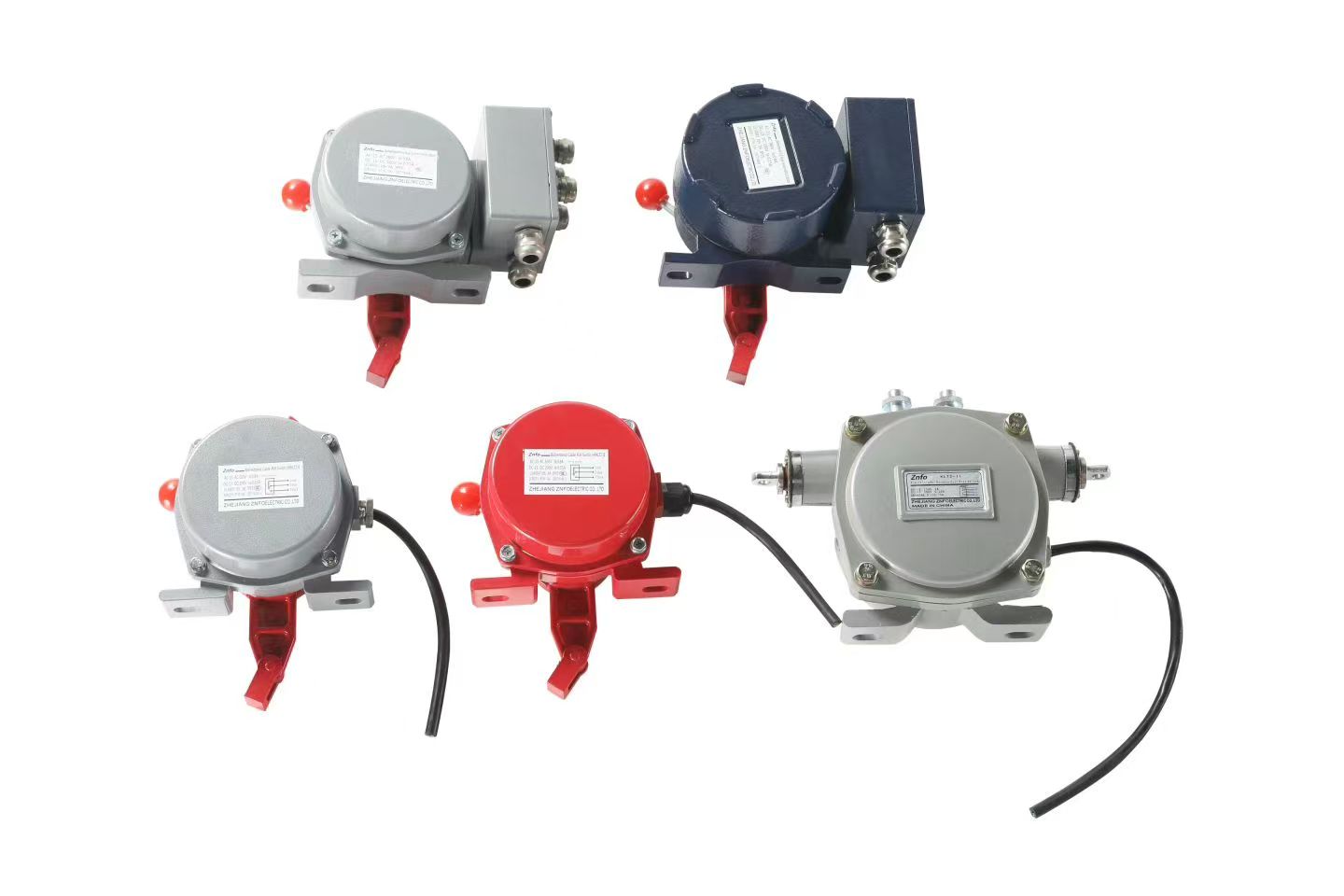
Misalignment switch, also known as the belt sway switch, the belt alignment switch, or the conveyor belt tracking switch, serves as a safety device for the lateral movement of a conveyor belt. Usually, misalignment switches are mounted along the sides of the conveyor system so that whenever the conveyor belt moves out of its normal position, the actuator or roller touches the edge of the conveyor belt.
When a conveyor belt moves laterally and comes in contact with the roller, the Limit Switch also changes its electrical contact state. The output signal may trigger an alarm, call the operator's attention to the system, slow down the conveyor, or completely halt the operation of the conveyor belt. Thanks to this contact, maintenance technicians can check the reasons for the belt defect before any expensive damage is caused to the belt, idlers, pulleys, or the entire conveyor system.
To put it simply, the main purpose of the misalignment switch is to turn tracking issues with the belt into an observable and manageable maintenance event.
Why Conveyor Belt Misalignment Happens
The problem of conveyor belt misalignment is generally fabricated by a more than one reason. The problem can develop gradually it happens due to changes in conditions of work. Understanding the reason is very important because a device may prevent the problem but not can solve it.
Some of the most common reasons for an unbalanced conveyor can include improper loading of the material into the conveyor, a conveyor frame that is crooked, misalignment of the pulleys or idler rolls, defective rollers, splicing problem in the belt, excessive dust on the pulley, low tension on the belt, or changing types of loading. Problems can become more frequent if wet or sticky materials, abrasive materials or materials of sizes larger than average pass through the conveyor.
In the first case, suppose bulk materials are loaded constantly near one end of the conveyor belt, leading to the tracking of the belt towards the opposite end. In the other scenario, the build-up on a return pulley might lead to a change in the effective diameter of the pulley hence making the belt misalign. In any of these occurrences, a system to monitor alignment will alert the manager of conveyor problems.
Main Uses of a Misalignment Switch
The chief purpose of a misalignment switch is to help in extending the life of conveyor machinery by preventing excessive belt drift. Nevertheless, this device has a wider function than just stopping a belt from moving.
Preventing Belt Edge Damage
When a conveyor belt comes in contact with steel parts, barriers, and brackets, it starts experiencing edge wear almost immediately. In the course of time, edge wear may cause shredding, cracking, delamination, or a total failure of the belt. Since replacing a huge industrial conveyor belt is very costly and time-consuming, it is preferable to detect problems at early stages.
Reducing Material Spillage
Material can be missed because of a belt running off center at various transfer points such as transfer, discharge, or skirt board systems. Therefore, spillage can happen along the conveyor line, requiring extra cleaning work, causing loss of products, and creating slip chances. A misalignment switch could help indicate the problem beforehand to prevent additional cleaning.
Protecting Rollers, Pulleys, and Conveyor Structure
Severe tracking issues cause abnormal straining of the conveyor parts. Misaligned belt may touch side frames or brackets, overload idlers, and cause unusual wear and tear on pulleys. In high-demand applications, this can create serious damage. A correctly installed switch allows to stop the conveyor before it becomes damaged.
Supporting Safer Conveyor Operation
Conveyors are usually used in hazardous environments like underground mines, quarries, grain terminals, steel plants, and closed production areas. Incorporating a faulty or misaligned conveyor belt into equipment may pose risks to employees when manual cleaning or urgent response is necessary. The installation of automatic belt monitoring systems ensures that workers don’t have to notice malfunctions when they turn into serious issues.
Improving Maintenance Planning
A misalignment switch gives helpful data about repeated belt tracking problems whenever it is linked with a PLC, SCADA system, or local alarm circuitry. The maintenance team can keep track of alarm occurrences, find patterns, and arrange for repairs during scheduled downtime.
How Does a Misalignment Switch Work?
Most models are equipped with a lever arm with a roller fitted close to the end of the conveyor belt. Under ordinary operating conditions, the belt runs without coming into contact with the roller and, depending on the configuration of the system, may not press on the roller at all. If the belt moves laterally, it pushes the roller, thereby causing rotation of the lever arm.
Typically, a switch has one or two operational stages. The initial stage is designed to deliver an alert when the conveyor belt starts to move outside of its prescribed pathway. If the belt has still not returned to its designated course, the second stage sets off an emergency shutdown. The two-stage mechanism allows users to take action before shutting down the entire system while still having it in defensive mode in case the issue deteriorates.
Contacts can be set as ordinarily closed, normally open or changeover contacts with whichever configuration is needed. The customer needs to verify the chosen configuration as well as the voltage, current and usability in the control system before they go ahead with their purchase.
Typical Misalignment Switch Installation Locations
The performance of the switch is closely related to its placement. Misalignment switches are typically used in pairs and installed on both sides of the conveyor belt. Usually, the misalignment switches are positioned at the places near the head pulley, tail pulley, take-up pulley, loading zone, and other areas where tracking the conveyor belt may be problematic.
For lengthy systems, it is sometimes good to install auxiliary switches at specific intervals or almost at troublesome transfer points. The purpose of this is to detect a drift in the belt before it comes into contact with the structure of the conveyor itself.
As per the guidelines by the manufacturer and the normal tracking tolerance of the conveyor, the roller must be installed a suitable distance away from the edge of the conveyor belt. When the roller is too near the edge of the conveyor belt, false alarms may be triggered. In cases where the roller is installed at a distance that is too far from the edge, the conveyor belt may cause damage before the switch has been triggered.
Industries and Conveyor Applications
Misalignment switches are utilized in many scenarios where bulk goods or packaged products are transported using conveyor belts. The importance of misalignment switches is more pronounced in demanding applications characterized by long belts, large capacities, abrasive materials, or limited supervision.
- Mining, quarrying, and mineral processing
- Coal handling systems and thermal power plants
- Cement, lime, and aggregate production
- Ports, ship loaders, and bulk cargo terminals
- Steel, metallurgy, and foundry operations
- Grain, feed, fertilizer, and biomass handling
- Recycling plants and waste sorting facilities
- Logistics centers, warehouses, and packaging lines
When working with outdoor conveyors, it is essential to choose equipment that is adequately protected against the weather. In locations where there is dust, moisture, corrosive conditions, high temperatures, or explosions, it is critical for enclosures and hazardous-location certifications to conform with actual site requirements.
How to Choose the Right Misalignment Switch
Conveyor systems could require different types of equipment. You need to look at more than just switch voltage in order to determine which options may work best for you. Make sure to consider the conveyor design, environment, safety requirements, and control specifications when it comes time to purchase a conveyor.
Operating Environment
Examine environmental conditions such as dust, moisture, humidity, corrosion, temperature, vibration, and cleaning. A conveyor located in an outdoor quarry will require an enclosure that is weatherproof and heavy-duty, whereas a conveyor used in a chemical plant will need parts made from corrosion-resistant material. In circumstances where there is a possibility of an explosion taking place, it is important to use an explosion-proof conveyor.
Switch Action and Contact Configuration
Identify if the same system should have either monitoring only for emergencies or both of the emergency and shutdown system in place. In systems for vital conveyors, two-stage belt sway switches are always advisable as they operate very fast and react immediately to the problem and, thus, prevent further damages. It is important to check how many contacts there are, what is their electrical Rating, and if they can be used in combination with existing relay/device/safety circuit.
Mechanical Construction
If you want to protect your heavy-duty conveyor belt, look for a strong housing, an effective actuating arm, an abrasion-resistant roller, dependable bearings, and hardware compatible with the frame of the conveyor. A strong construction is important when impact, vibration, and dust are frequent.
Reset Method
While some switches reset on their own after the conveyor belt has returned to its original position, several other switches will need to be reset manually after being activated. Manual-reset switches must be used in safety applications since they make sure that the cause of misalignment is resolved before restarting the conveyor machine.
Compliance and Documentation
Dependable vendors must furnish unambiguous technical specifications, circuit diagrams, installation guidelines, product illustrations, and pertinent certifications. Depending upon the place of application, customers may require CE, UL, ATEX, IECEx, or any combinations of the above names.
Installation and Maintenance Best Practices
A premium apparatus cannot guarantee proper function if it has been incorrectly set up. During pre-commissioning activities, it is necessary to verify that the conveyor belt is properly lined up under standard operating conditions. The switch must be installed properly, with the roller parallel to the belt edge with the necessary distance as suggested by the manufacturer.
Check the alarm and trip operation during the commissioning phase. Confirm that the control system is interpreting the signal correctly and that the conveyor reacts properly to it. And in a two-stage unit, make sure that the functions of both the warning signal and the shutdown signal are working correctly.
In the process of routine inspections, be on the lookout for rollers with damages, mounted bolts that are loose, corrosion, accumulation of materials, actuators that are worn, and cable entries that are damaged. Testing of electrical contacts must also be done regularly as part of the preventive maintenance regimen for the conveyor. More importantly, treat any instances of repeated activation as a sign of conveyor tracking problem that is in need of a mechanical remedy.
Misalignment Switch vs. Other Conveyor Safety Devices
A misalignment switch is one component of a total conveyor protection system. The switch does not replace other monitoring equipment but works in conjunction with them. Pull cord switches are used to provide an emergency stop point along the conveyor line. Speed switches are vital in finding slow-moving or even stationary operations. Belts ripped detectors identify lengthwise rips in belts. Chute blockage switches are needed to assess the buildup of materials at points of transfer along the conveyor.
Every device tackles a unique failure mode, and by integrating them into the same system, the operators gain much greater awareness of conveyor issues, which makes it possible to avoid small problems turning into dangerous or long interruptions.
FAQ
What is a misalignment switch?
The purpose of a misalignment switch is that of a conveyor safety device, in order to detect whenever the conveyor belt moves out of the specified position. It may either activate an alarm or stop the conveyor belt to save it from getting damaged.
Is a belt sway switch the same as a misalignment switch?
Indeed, Belt sway switch, belt alignment switch, conveyor belt tracking switch, and misalignment switch are popular terms for devices that keep track of the sidewise movement of conveyer belts. But remember that since different companies use different nomenclature and technologies, it is advisable to check technical specifications for each manufacturer.
Can a misalignment switch fix a tracking problem?
The switch detects excessive movement of the belt and activates either an alarm or shutdown. The underlying cause must be addressed by checking for belt loading, pulley alignment, idler condition, belt tension, conveyor structure, and material accumulation.
Where should a conveyor belt misalignment switch be installed?
This type of switch is generally placed in pairs, practically on both sides of the belt in the head and tail pulleys, the loading area, the take-up area, and other places where problems with tracking may arise. Some lengthy or critical conveyors require more than one switch set.
Should I choose an automatic-reset or manual-reset switch?
Automatic resets work best if transient belt movement happens and the control system ensures safety during the restart. In contrast, manual resets are more favored for mission-critical situations since they need a safety check before the belts start operating again.
Choosing and maintaining a misalignment switch can be a great asset for conveyor reliability. It enables one to identify problems with belt tracking before they lead to edge destruction, spillage, wear on the parts of conveyor systems, and unexpected stoppages in transport processes. When correctly installed and combined with regular inspections and other safety measures, the system will provide operators with a reliable tool to ensure the safe operation of conveyor installations and systems.