






What are the main uses of AC contactors?
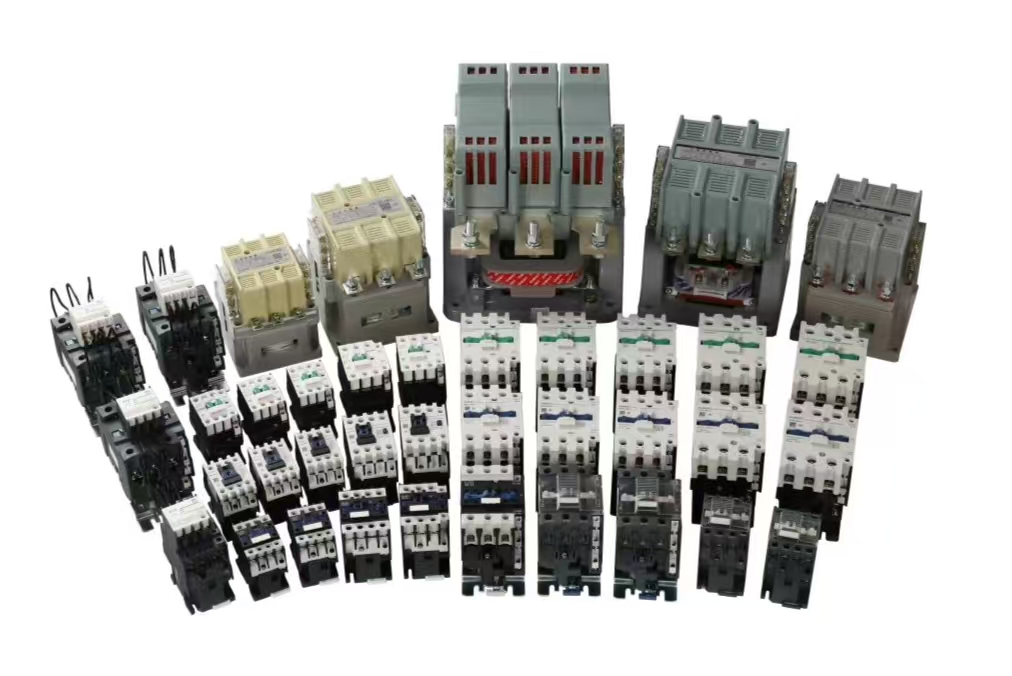
The Ac Contactor serves as a vital component in industrial control and power systems, primarily functioning to enable remote automatic control of high-power electrical loads. As an electromagnetically operated switching device, it utilizes low-voltage signals to manage high-voltage, high-current circuits, effectively ensuring operational safety while enhancing system automation.
In industrial settings, AC contactors undertake the core task of motor control. Three-phase asynchronous motors, as power sources for mechanical equipment, often require frequent start-stop or forward-reverse operations. Contactors employ magnetic force to close main contacts, connecting industrial voltages of 380V/660V. Their arc-extinguishing systems can safely interrupt current loads reaching hundreds of amperes. For instance, in packaging production lines, multiple contactors coordinate with PLC programming to achieve sequential control of conveyor belts and filling machines. With mechanical endurance typically exceeding a million operations, they significantly boost production efficiency.
Heating, Ventilation, and Air Conditioning (HVAC) systems represent classic application scenarios. When a thermostat triggers a cooling signal, 24V AC energizes the contactor Coil, generating an electromagnetic field that pulls silver-alloy main contacts closed. This action delivers 220V power to compressor and fan circuits. Specially designed magnetic blowout chambers effectively suppress arcing during contact separation, ensuring equipment safety during frequent cycling. Statistics show commercial HVAC systems execute tens of thousands of start-stop cycles annually, making contactor electrical endurance a critical reliability factor.
Within power systems, contactors paired with thermal relays form motor protection units. During current overload, bimetallic strip deformation activates a trip mechanism, forcing contactors to interrupt circuits within 15 milliseconds. This rapid breaking capability combined with fuses creates a three-tier protection system, effectively preventing motor burnout. In photovoltaic inverter applications, DC contactors (a specialized variant) undertake circuit-breaking functions on the DC side, featuring unique magnetic circuit designs to handle the high-energy characteristics of DC arcs.
Furthermore, contactors play essential roles in crane systems, elevator controls, and welding equipment. Modern energy-efficient models incorporate permanent magnet holding technology, reducing coil power consumption by 80% and aligning with green manufacturing trends. Modular auxiliary contact sets can also provide equipment status feedback, supporting data collection for IoT monitoring systems.
In summary, as critical interfaces for power conversion, AC contactors deliver irreplaceable value in ensuring electrical safety, enabling automation, and improving energy efficiency, establishing themselves as fundamental building blocks for modern industrial automation and smart building infrastructure.